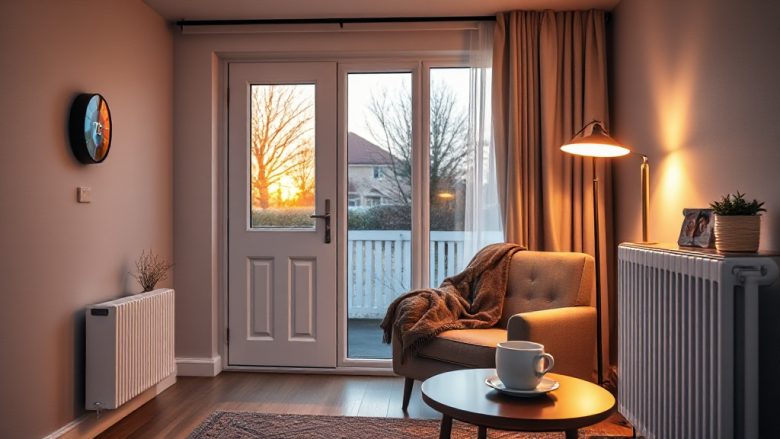
The bill landed on the doormat in January and I actually laughed, then checked it twice in case the meter reader had made a mistake. He hadn’t. We were paying more to heat a house that still felt chilly, and something had to change. What follows is the plan I built over the next few months, room by room, starting with the things that cost nothing at all. Learning how to reduce energy bills at home doesn’t have to mean shivering under a blanket or living in the dark. It means being smarter about where the money goes.
Quick wins that cost nothing
Before spending a penny, I walked around the house and wrote down every place where heat or electricity was quietly leaking away. The list was longer than I expected, and most of it was fixable with my own hands.
The first change was the thermostat. We dropped it by one degree and left it there for a week to see how it felt. Nobody complained. That single degree is one of the cheapest adjustments you can make, and it works because most homes are heated a touch warmer than they need to be. The trick is to stop fiddling with it. A thermostat that gets nudged up and down all evening uses more energy than one set to a steady, slightly lower temperature.
Next came the curtains. Opening them wide on sunny mornings lets free warmth in, and closing them at dusk keeps it there. Thick curtains drawn across a cold window make a surprising difference, especially in rooms with older glazing. I also moved a sofa that was sitting directly in front of a radiator. Furniture blocking a radiator absorbs the heat that should be warming the room.
Then there are the standby habits. Televisions, games consoles, set-top boxes and phone chargers all sip electricity when they’re plugged in but not really in use. A switched extension lead by the television let us cut all of that off in one go each night. It sounds trivial, but it adds up over a winter.
Heating and hot water: where the real money sits
Heating and hot water are usually the biggest slice of a household energy bill, so this is where the most careful attention pays off. The good news is that you don’t need a new boiler to make progress.
Start with the timer and the programmer. Ours was still set to the schedule the previous owners had used, which heated the house at times nobody was home. Reworking it so the heating came on shortly before we woke and switched off when we left took an afternoon and cut a noticeable chunk from the following month. If you have a hot water cylinder, check its thermostat too. Water heated far hotter than you need is money poured down the drain, quite literally.
Bleed the radiators. If the top of a radiator is cool while the bottom is hot, there’s air trapped inside and the whole system has to work harder. A radiator key costs very little and the job takes minutes per radiator. While you’re at it, feel along the pipes and the radiator valves for any obvious leaks or drips.
If your radiators have no thermostatic valves, fitting them room by room gives you control you didn’t have before. You can then turn down the spare bedroom nobody uses and keep the living room comfortable. That kind of zoning matters more than most people realise, because heating empty rooms is one of the quietest ways to waste money.
For hot water, shorter showers and a lower flow setting on the shower head make a real difference without feeling like a sacrifice. I timed mine and was genuinely surprised. A shower that runs for four minutes instead of eight halves the hot water used, and the bathroom still feels warm because the room itself is heated.
Appliances and lighting: small habits, steady savings
Kitchen appliances are the second place I looked, because they run every single day. The tumble dryer is the hungriest of them all, so we started using a clothes airer indoors on dry days and saved the dryer for emergencies. If you must use it, spin the washing machine a little faster first so the clothes go in drier.
The washing machine itself does most of its work heating the water, so washing at a lower temperature and saving the hot cycle for genuinely soiled items is an easy win. Modern detergents are formulated to work well at lower temperatures, so the clothes still come out clean. Fill the machine properly rather than running half-loads, and use the eco setting when you have one.
The kettle is another small one. Boiling only the water you need, rather than filling it to the top every time, is a habit that costs nothing and saves a little every day. The same logic applies to the oven: batch cooking and using the residual heat by switching off a few minutes early both help.
Lighting has changed a lot in recent years. If you still have old halogen bulbs anywhere, swapping them for efficient LED versions is one of the simplest upgrades available, and they last for years. Beyond that, the free version is simply turning lights off when you leave a room. It sounds obvious, but a house with five lights left on all evening is paying for light nobody is using.
Insulation and draught-proofing: stopping the leaks
You can heat a house perfectly and still lose most of that warmth through gaps and thin surfaces. Draught-proofing is the cheapest form of insulation and the one I’d tackle first.
Run your hand around window frames, doors, letterboxes, keyholes and the gaps where pipes and cables come through walls. On a windy day you’ll feel the cold air moving. Self-adhesive draught strips, brush seals and a simple draught excluder for the bottom of doors cost very little and can be fitted in an afternoon. A chimney that’s no longer used is another classic leak; a chimney balloon or draught excluder stops warm air vanishing up it.
Once the obvious gaps are closed, think about the bigger surfaces. Loft insulation is often the next best value improvement, because heat rises and an uninsulated loft lets it escape through the ceiling. If your loft insulation is thin or patchy, topping it up is a job many people can do themselves with the right materials and a bit of care around cables and vents.
Wall and floor insulation are bigger projects, and not every home suits every option, so it’s worth getting proper advice before committing. The point is to work from the cheap, quick fixes upward rather than jumping straight to expensive work. A well-sealed, well-insulated house needs less heating to stay comfortable, which is the whole goal.
Habits and monitoring: keeping track of what you spend
None of this sticks unless you can see whether it’s working. Reading your meter regularly, rather than waiting for the bill, turns energy use into something you can actually manage. I started noting the reading every Sunday morning, and the pattern became obvious within a few weeks.
A smart meter or an in-home display helps even more, because it shows in real time what’s being used. Watching the numbers jump when the tumble dryer starts, or settle when the heating clicks off, teaches you more about your own home than any general advice can. If you don’t have one, a simple weekly note in a notebook does the same job.
Habits matter as much as hardware. Closing doors to keep heat in the rooms you’re using, drying clothes on a rack instead of a radiator, and layering up with a jumper before reaching for the thermostat all reduce demand without reducing comfort. The trick is to make the comfortable choice the easy one, so you’re not fighting yourself every evening.
It also helps to know roughly what each appliance costs to run, so you can decide where to focus. The big, hot, long-running things are almost always the ones worth attention: heating, hot water, the dryer, the oven. Small gadgets matter far less, so don’t spend your energy worrying about them.
Your closing checklist
If you take one thing from all of this, let it be the order of operations: free changes first, then cheap fixes, then bigger upgrades only once the basics are done. That way you see savings early and can decide whether a larger project is worth it for your home.
Here’s the short version I keep on the fridge, in the order I’d do it:
- Turn the thermostat down a degree and leave it alone.
- Use curtains, doors and furniture placement to keep heat where you want it.
- Fix the heating schedule and bleed the radiators.
- Draught-proof doors, windows and the chimney.
- Switch off standby power and swap any remaining old bulbs for LEDs.
- Read the meter weekly so you can see what’s actually changing.
Work through it at your own pace. Even the first two or three items usually make a visible difference by the next bill, and the house stays just as warm as it was before.
Frequently asked questions
Will turning the thermostat down really make the house colder?
Not if you compensate in small ways. A jumper, slippers and a closed door do more than most people expect. Lowering the setting by a single degree is barely noticeable in the room, but it shows up clearly on the bill over a full winter.
Is draught-proofing worth it if my home is already reasonably insulated?
Yes. Insulation slows heat loss through surfaces, but draughts let warm air escape outright. Sealing gaps around doors, windows and the chimney is cheap, quick, and complements insulation rather than replacing it.
Do I need to buy new appliances to save money?
No. Changing how you use what you already own usually saves more than rushing out to replace it. Use the dryer less, wash cooler, fill the machine properly and switch things off at the wall. Replace appliances only when they genuinely need replacing.
How quickly will I notice a difference?
Habits and draught-proofing often show up within the first full billing period. Bigger changes like loft insulation take longer to pay back, but they keep working year after year once they’re in place.