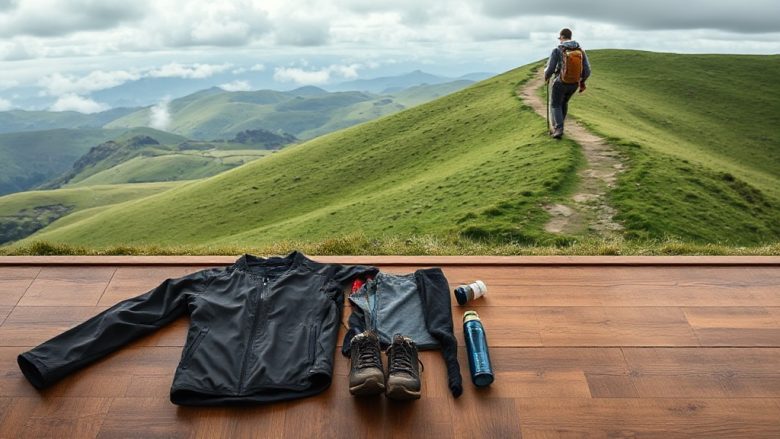
British weather rarely commits to a plan. You can leave the house under a clear blue sky, reach a ridge in warm sun, and then walk straight into a cold, sideways drizzle within twenty minutes. That’s why the question of what to wear on a day hike isn’t really about buying expensive gear. It’s about dressing in a way that lets you adapt without stopping to unpack half your wardrobe on a windy hillside.
The good news is that a simple three-layer system covers almost every day hike in the UK, from a gentle valley ramble to a full day on the fells. You probably already own most of it. This checklist walks through the layers, the footwear, the extras worth carrying, and how to shift things around when the forecast turns.
The three-layer principle, explained simply
Layering works because it gives you options. Instead of one thick jacket that’s either too hot or too cold, you wear a few thin pieces that can be added or removed as your body heat and the weather change. Three layers is the classic setup, and it’s enough for the vast majority of day hikes.
The base layer sits against your skin. Its job is to move sweat away from your body so you don’t end up clammy and cold. A synthetic t-shirt or a merino wool top both do this well. Cotton does the opposite — it soaks up sweat and stays wet, which is why a cotton t-shirt is the one thing worth leaving at home. On a mild day, this layer might be all you wear on your upper body while you’re moving.
The mid layer traps warmth. A fleece, a thin insulated jacket, or even a light hoodie works here. This is the layer you’ll take off when you start climbing and put back on when you stop for lunch. It should be easy to remove without wrestling with it, so a full-zip fleece is more practical than a pullover.
The outer layer keeps the wind and rain out. A lightweight waterproof jacket with a hood is the standard choice. It doesn’t need to be heavy or expensive — it needs to be genuinely waterproof rather than merely water-resistant, and it needs to fit over your mid layer without feeling tight across the shoulders. If you’re hiking in summer, a thin windproof shell can replace the waterproof on dry days, but it’s worth carrying the waterproof anyway.
On your legs, the same idea applies but with fewer layers. Walking trousers or leggings made from a quick-drying synthetic fabric are ideal. Avoid jeans, which get heavy when wet and take forever to dry. If it’s cold, add a thin pair of leggings under your trousers. If it’s warm, shorts are fine — just pack the trousers in case the weather turns or you end up walking through long grass and ticks.
What to wear on your feet
Footwear is where most day hikers get it wrong, and it’s also where the wrong choice hurts the most. The single most important rule is this: wear shoes you’ve already broken in. A brand-new pair of boots on a ten-mile walk is a recipe for blisters, no matter how good they are.
For most day hikes on well-trodden paths, a pair of trail shoes or sturdy walking shoes is plenty. They’re lighter than boots, dry faster, and give you more feel for the ground. If you’re heading onto rougher terrain, boggy ground, or steep descents, boots with ankle support are worth the extra weight. The choice really comes down to the ground under your feet rather than the distance.
Socks matter more than people expect. A wool or synthetic blend cushioning sock wicks moisture and reduces friction. Cotton socks hold sweat against your skin and are a common cause of blisters. Take a spare pair in your pack — changing socks halfway through a walk can rescue a day that’s starting to go wrong.
What to carry in your pack
You don’t need much for a day hike, but a few items turn a miserable walk into a comfortable one. A small rucksack of around 20 to 25 litres is about right for a day out. Pack it so the heavier items sit close to your back and the things you might need quickly — waterproof, snacks, hat — are near the top.
Spare layers are the core of your pack. Even on a warm day, a fleece and a waterproof shell should go in. If you’re heading up high or the forecast is uncertain, add a thin insulated jacket and a spare base layer. A hat and gloves weigh almost nothing and make a huge difference when the wind picks up on an exposed section.
Water is the thing people most often underestimate. On a warm day, a litre and a half to two litres is a sensible starting point for a half-day walk, more if it’s hot or you’re climbing. A refillable bottle or a hydration bladder both work; the important thing is that you actually drink from it. Snacks like nuts, oatcakes, or a sandwich keep your energy steady, and a few sweets in your pocket are a nice morale boost on a long climb.
Beyond clothing, a few small items earn their place. A basic first aid kit with blister plasters, a head torch in case you’re out later than planned, a charged phone, and a paper map if you’re heading somewhere unfamiliar. A lightweight sit mat or a spare plastic bag to sit on saves you from a wet backside at lunch. Sunscreen and sunglasses belong in the pack from spring through autumn, even when it’s cloudy — UV gets through cloud and bounces off water and pale rock.
Dressing for changing UK weather
The forecast is a starting point, not a guarantee. A few habits make the difference between being comfortable and being caught out.
Start slightly cool. If you set off feeling toasty, you’ll be overheating within ten minutes of walking. It’s normal to feel a bit chilly for the first few minutes; your body warms up fast once you’re moving. Adjust as you go rather than dressing for the coldest moment of the day from the outset.
Stop and change before you get cold. It’s tempting to push on when the rain starts, but putting your waterproof on early keeps you drier and warmer. The same goes for adding a layer when you stop for a break — your body cools quickly once you’re standing still, so reach for the fleece before you sit down, not after you’ve started shivering.
Wind is the sneaky one. A still valley can feel mild, while an exposed ridge a few hundred metres higher feels like a different season. If your route includes any open ground or height gain, pack for the windier version of the day, not the one you’re standing in at the car park.
Rain in the UK is often light and intermittent rather than a full downpour. That means a light waterproof you can put on and take off easily is more useful than a heavy coat you’ll resent carrying. If it’s genuinely wet, waterproof trousers are worth having — wet legs chill you quickly, and they take up very little space.
A quick checklist before you leave
Run through this in your head as you’re heading out the door. It takes thirty seconds and saves a lot of faffing later.
- Base layer: synthetic or merino top, quick-drying trousers or leggings, spare socks.
- Mid layer: fleece or thin insulated jacket.
- Outer layer: waterproof jacket with a hood, waterproof trousers if rain is likely.
- Feet: broken-in shoes or boots, wool or synthetic socks.
- Pack: hat, gloves, spare layer, water, snacks, first aid bits, phone, map if needed.
If you’ve got all of that, you’re ready for almost anything a British day out can throw at you. The trick isn’t owning the fanciest kit — it’s being able to add and remove layers as the day unfolds, so you stay comfortable whether the sun stays out or the clouds roll in.
Frequently asked questions
Can I wear jeans on a day hike?
You can, but it’s not a great idea. Denim soaks up water, gets heavy, dries slowly, and chafes when it’s damp. Quick-drying walking trousers or leggings are far more comfortable and pack down smaller if you need to change.
Do I really need a waterproof jacket in summer?
Yes, or at least a light one in your pack. UK summer weather can turn quickly, and a thin waterproof weighs very little. Even on a dry day, it doubles as a windproof layer on exposed sections.
How many layers should I wear while walking?
Start with your base layer and add or remove the mid and outer layers as you go. Most people walk in one or two layers and carry the rest. The goal is to stay warm without sweating heavily, so adjust often rather than dressing once and hoping.
What’s the best footwear for a first day hike?
Whatever you already own and have worn comfortably. Trainers with decent grip work fine for gentle paths. If you’re heading onto rougher or wetter ground, borrow or buy a pair of walking shoes or boots and break them in on shorter walks first.