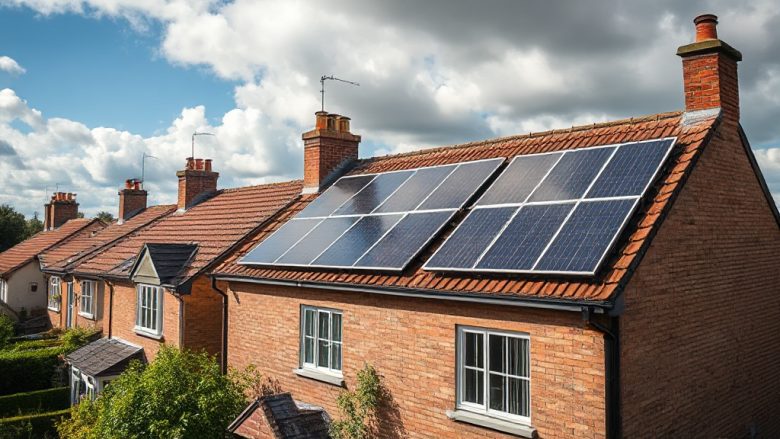
Yes, solar panels can be worth it in the UK, but not for every home. The honest answer is that it depends on your roof, how you use electricity, and how long you plan to stay put. If you have a decent south-facing roof, run appliances during the day, and expect to remain in the property for at least a decade, the numbers usually work. If you have heavy shading, a north-facing roof, or you might move in three years, they often don’t.
This is a reality check rather than a sales pitch. We’ll look at how the economics actually work in a cloudy climate, what you can realistically save, when a battery makes sense, and which households tend to come out ahead.
How solar economics work in a cloudy country
The first thing to understand is that UK solar doesn’t rely on blazing sunshine. Panels generate electricity from daylight, and they work perfectly well under grey skies. A cloudy day might knock output down by 60 to 80 percent compared with a clear summer day, but it doesn’t drop to zero. Over a year, a well-sited system in southern England will produce meaningfully more than one in northern Scotland, but both can still be worthwhile.
What matters far more than the weather is how much of that electricity you actually use yourself. Every unit you consume at home is a unit you don’t buy from your supplier. Every unit you export to the grid earns you a much smaller export payment. So the value of a solar installation hinges on self-consumption. A household that runs a washing machine, dishwasher, and heat pump during daylight hours will get far more out of the same panels than one that is empty from nine to five.
Payback periods in the UK typically land somewhere between eight and fifteen years, depending on system size, location, and how much electricity you use directly. That’s not instant, but panels usually last 25 years or more, so there’s a long tail of essentially free electricity after the break-even point.
What solar panels cost and what you can save
A typical 4kW system on a UK home costs somewhere in the region of £5,000 to £7,000 installed, before any battery. That’s a broad range because scaffolding, roof type, and inverter choice all move the number. A 6kW system might run £7,000 to £9,500. Adding a battery usually adds £3,000 to £5,000 on top, depending on capacity.
On the savings side, a 4kW system in a reasonably sunny part of the country might generate around 3,600 to 4,000 kWh a year. If you self-consume half of that at a rate of roughly 25p per kWh, you’re avoiding around £450 to £500 of imported electricity annually. The exported half earns you a smaller export payment, perhaps £80 to £120. So total annual benefit might sit around £550 to £600. Divide a £6,000 install by that and you’re looking at a payback of roughly ten to eleven years.
Push self-consumption higher with a battery or by shifting usage, and payback can drop toward seven or eight years. Leave the house empty all day with no battery, and it can stretch past fifteen. The difference between a good and a poor solar decision is rarely the panels themselves. It’s the usage pattern behind them.
Is your roof and home actually suitable?
Roof orientation is the single biggest physical factor. South-facing is ideal. East or west-facing still works well, producing a bit less overall but spreading generation across more of the day, which can actually suit some households better. A north-facing roof is usually a poor candidate unless the pitch is shallow and the alternative is nothing at all.
Shading matters too. A chimney, a large tree, or a neighbouring building casting shadow across part of the array can drag down the whole system’s output, particularly with older string inverters. Modern systems with optimisers or micro-inverters handle partial shading much more gracefully, but they cost more.
Then there’s the roof itself. Slate, tile, and metal all work. If your roof is old and due for replacement within a few years, do the roof first. Lifting panels to re-roof later is an expensive annoyance. Structural condition matters as well; a surveyor or installer can confirm the roof can take the weight and wind loading.
Finally, consider your plans. If you’re likely to move within five years, you probably won’t recoup the installation cost through savings alone. You might recover some value in the sale price, since buyers do pay attention to solar, but that’s not guaranteed. Solar rewards patience.
Batteries, alternatives, and other ways to improve the maths
A battery changes the equation by letting you store daytime generation for evening use, when most households actually consume power. If you’re out during the day, a battery can lift self-consumption from around 30 percent to 60 or 70 percent, which meaningfully shortens payback. If you’re already home all day and using power as it’s generated, a battery adds less value and may not be worth the extra cost.
There are other levers. A smart tariff that charges you less for off-peak electricity lets a battery top up overnight in winter, and some tariffs pay more for export at peak times. Shifting heavy appliances to daylight hours costs nothing and improves returns immediately. An electric vehicle charged during the day is another way to soak up generation that would otherwise be exported cheaply.
If solar alone doesn’t stack up for your home, it’s worth asking what would. Sometimes a smaller system with a battery beats a larger array without one. Sometimes the better move is improving insulation, switching to a heat pump, or simply waiting until your circumstances change. Solar isn’t the only route to lower bills, and it shouldn’t be treated as a default.
Are solar panels worth it in the UK? A verdict by household type
For a family that owns a south-facing home, uses plenty of daytime electricity, and plans to stay for fifteen years, solar is very likely worth it. Add a battery if they’re out during the day and the case gets stronger still.
For a retired couple at home all day with a modest electricity bill, solar can work well because self-consumption is naturally high, even without a battery. The payback may be longer in absolute terms because their usage is lower, but the environmental case and the buffer against future price rises are real.
For a flat with a shared roof or a north-facing terrace, solar is usually impractical or uneconomic. For a landlord who might sell in a few years, it’s a harder sell, though tenants benefit from lower bills and the property may gain appeal.
For anyone in a period property with a shaded, awkward roof, the honest answer is often no. Spending the same money on insulation or a more efficient heating system may deliver better returns with less hassle.
The UK climate is not the obstacle people assume. Daylight is plentiful enough, and panels are cheap and durable. The obstacle is fit. Get the fit right and solar pays. Get it wrong and you’ll wait a long time to break even.
Frequently asked questions
Do solar panels work on cloudy days in the UK?
Yes. They generate from daylight, not direct sun, so they still produce on overcast days, just at reduced output. You’ll see lower generation in winter and on grey days, but the system keeps working and the annual total is what matters for payback.
How long does it take for solar panels to pay for themselves in the UK?
Typically eight to fifteen years, depending on system size, location, electricity prices, and how much of the generated power you use yourself. Higher self-consumption and a battery push payback shorter; low daytime usage and no storage push it longer.
Do I need a battery to make solar worth it?
Not always. If you’re home during the day and use power as it’s generated, a battery adds less value. If you’re out and want to use solar in the evening, a battery can meaningfully improve the economics by raising self-consumption.
Will solar panels increase my home’s value?
They can make a property more attractive to buyers, particularly with rising energy costs, but the effect varies by area and buyer. It’s safer to treat any resale uplift as a bonus rather than a guaranteed part of the payback calculation.